
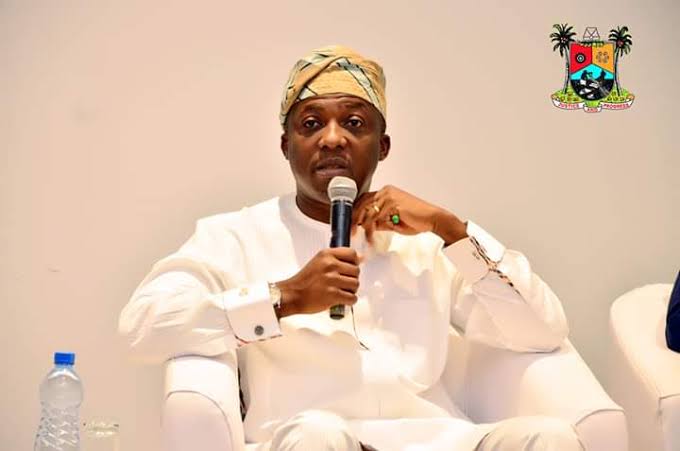
The Lagos State Government, through its Ministry of Environment and Water Resources, has been the subject of criticisms after recent enforcement activities at retail stores in parts of the state over the ban of single-use plastics.
In recent days, the Commissioner for Environment and Water Resources, Tokunbo Wahab, has posted footage of state officials conducting enforcement action, but critics have faulted the logic of targeting retail stores and not the manufacturers of the products they sell. The enforcement activities have seen officials seizing products like Lucozade Boost and Capri-Sun with plastic straws, but some reason that manufacturers are at fault.
EDITOR’S PICKS
On Thursday, officials visited Blenco Supermarket in Lekki, Blend and Temple Hill Supermarkets in Ire-Akari, Jendol Supermarket in Jakande Estate, and several others in Idimu. Wahab said these visits are part of its wider efforts to enforce the state’s directive phasing out single-use plastics, which it argues worsen flooding and pose long-term environmental risks.
A statement on social media said the Lagos government will “continue to monitor, enforce, and work with businesses to adopt sustainable alternatives that safeguard our environment.”
Our Enforcement Team today visited Blenco Supermarket in Lekki to enforce the ban on Single Use Plastics (SUP). This action is part of our wider efforts to ensure compliance with the State’s directive on phasing out SUP, which poses serious environmental risks and worsens… pic.twitter.com/Dg2OHzSUqc
— Tokunbo Wahab (@tokunbo_wahab) September 3, 2025
Critics Question Strategy
Some residents, however, have questioned why enforcement is concentrated at the point of sale rather than at the point of production. Social media users argued that confiscating products from supermarkets amounts to punishing retailers rather than addressing the root of the problem.
“What if I told you this man right here… is going around retail stores and confiscating Capri-Sun because of its rubber straws. Retail stores o, not manufacturers. I kid you not,” one X user, Monsieur Avril wrote.
Goodmorning World Citizens,
What if I told you this man right here @tokunbo_wahab, LASG Commissioner of Environment & a Lawyer of 3 Decades, is going around retail stores & confiscating capri-sun cos of its rubber straws.🧃
Retail stores o, not manufacturers.
I kid you not! 🥹 pic.twitter.com/SqpP0mZMEX— Monsieur Avril 📑 (@monsieur_avril) September 5, 2025
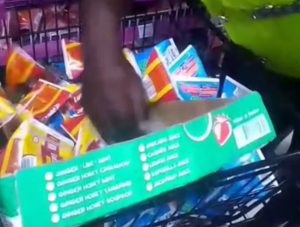
Another commenter said: “They did not visit the manufacturer. They did not seize the straw. They just went ahead to seize the product and still left the straw that they claim is the reason for the seizure. This is crazily unthinkable.”
They did not visit the manufacturer
They did not seize the straw
They just went ahead to seize the product and still left the straw that they claim is the reason for the seizure.
This is crazily unthinkable— Son Of Ayo (@TheAjakeManger) September 5, 2025
Manufacturing vs. Retail Enforcement
This raises a fundamental question about where enforcement should begin.
Targeting retailers might remove the banned items from immediate circulation, but it does not stop manufacturers from continuing to produce and distribute them.
On the other hand, going after manufacturers would tackle the problem at the source but could take longer to yield results and might require cooperation with federal agencies, especially if the companies are based outside Lagos.
Some argue that a fairer approach would combine both strategies, first working with retailers to phase out their existing stock while engaging manufacturers to change their production methods. Others believe the government should have started at the top of the supply chain rather than seizing products already purchased by retailers.
The Ongoing Debate
For now, the state government appears committed to its current method, saying enforcement will continue across more stores.
FURTHER READING
Whether this approach will force change among producers or simply inconvenience retailers remains to be seen, but the conversation about where responsibility should lie — at the factory or the shop floor — is far from over.
Philip Ibitoye is a Special Correspondent with EKO HOT BLOG. Click here to find daily analysis and critical insight on trending issues in Lagos and other parts of Nigeria.
Click here to watch the video of the week below:
Advertise or Publish a Story on EkoHot Blog:
Kindly contact us at [email protected]. Breaking stories should be sent to the above email and substantiated with pictorial evidence.
Citizen journalists will receive a token as data incentive.
Call or Whatsapp: 0803 561 7233, 0703 414 5611