
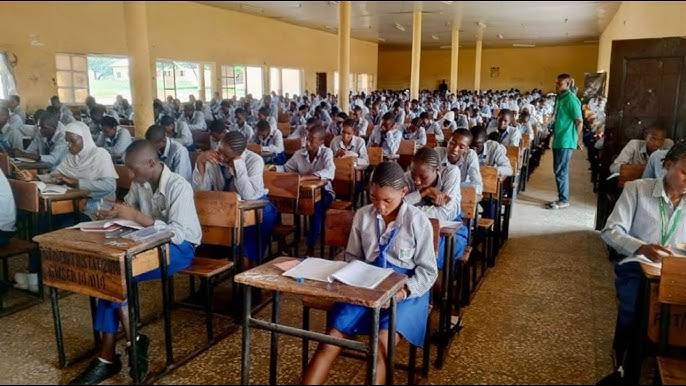
- Ministry of Education Streamlines Subjects, Introduces Skill-Focused Curriculum
- Under the new structure, pupils in Primary 1–3 will take a minimum of nine and a maximum of 10 subjects
- For technical colleges, NABTEB will oversee 28 revamped trade subjects
The Federal Government has announced a sweeping review of Nigeria’s national curriculum, aimed at reducing subject overload, improving skill acquisition, and aligning education with global best practices.
Eko Hot Blog reports that the Honourable Minister of Education, Dr. Maruf Tunji Alausa, CON, and the Minister of State for Education, Professor Suwaiba Sa’id Ahmad, disclosed the reforms after wide consultations with stakeholders, including the Nigerian Educational Research and Development Council (NERDC), WAEC, NECO, NBTE, and NABTEB.
EDITOR’S PICK
- UN Suspends Humanitarian Air Service in Northeast Nigeria
- Tinubu Departs Abuja for 10-Day Working Vacation in Europe
- Three Killed as Cult Clashes Mar Masquerade Festival in Lagos Island
Under the new structure, pupils in Primary 1–3 will take a minimum of nine and a maximum of 10 subjects, compared to the previous 13–15.
Primary 4–6 will study 11–13 subjects, while Junior Secondary School (JSS 1–3) will be limited to 12–14 subjects. At the Senior Secondary level, students will now select eight to nine subjects, streamlined into five core areas: Humanities, Sciences, Business, one trade subject, and compulsory general courses.
A key innovation is the introduction of Citizenship and Heritage Studies at the senior secondary level, created by merging Nigerian History, Civic Education, and Social Studies. Nigerian History has also been reintroduced as a compulsory subject from Primary 1 through JSS 3.

Trade subjects have been drastically reduced for non-technical schools, from more than 30 to six practical areas:
Solar PV Installation and Maintenance
Fashion Design and Garment Making
Livestock Farming
Beauty and Cosmetology
Computer Hardware and GSM Repairs
Horticulture and Crop Production
For technical colleges, NABTEB will oversee 28 revamped trade subjects, while WAEC and NECO have aligned their examinations to reflect the revised structure.
Speaking on the development, Dr. Alausa said the new curriculum, which takes effect in the 2025/26 academic session, is designed to give learners a more focused education.
“This reform will allow children to learn in a more functional way without the burden of too many subjects. Teachers will benefit from a simpler structure, while government resources can be better directed toward building a stronger, skill-driven education system,” he stated.
The Ministers described the curriculum overhaul as part of the Federal Government’s commitment to revitalizing education, enhancing quality, and equipping Nigerian students with the skills to thrive in the global economy.
Parents, teachers, and students were assured that adequate support will be provided to ensure a smooth transition.
Subject Breakdown (Old vs New)
Primary 1–3: 13–15 subjects → 9–10 subjects
Primary 4–6: 15–17 subjects → 11–13 subjects
JSS 1–3: 15–18 subjects → 12–14 subjects
SSS 1–3: 15–20 subjects → 8–9 subjects
The reforms mark one of the most comprehensive curriculum reviews in decades, reflecting Nigeria’s push toward a more skill-based and globally competitive education system.
FURTHER READING
Click here to watch video of the week
Advertise or Publish a Story on EkoHot Blog:
Kindly contact us at [email protected]. Breaking stories should be sent to the above email and substantiated with pictorial evidence.
Citizen journalists will receive a token as data incentive.
Call or Whatsapp: 0803 561 7233, 0703 414 5611