-
Presidency clarifies Tinubu did not introduce a new 5% fuel tax.
-
Surcharge dates back to the 2007 FERMA Act, not Tinubu’s reforms.
-
Levy will fund road infrastructure but excludes household energy products.
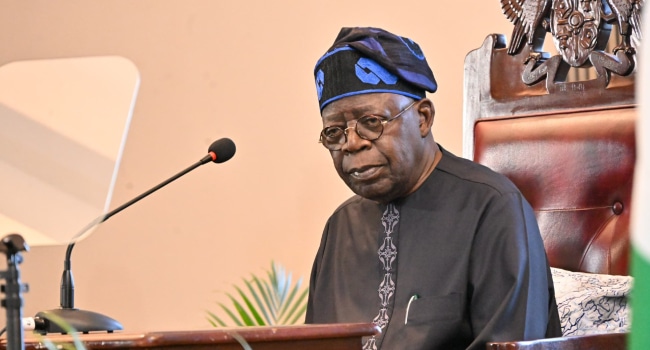
The Presidency has dismissed reports that President Bola Tinubu introduced a new 5% surcharge on fuel products, insisting that the provision has existed since 2007 under the Federal Roads Maintenance Agency (Amendment) Act.
EDITOR’S PICKS
- How Nigeria’s Excess Crude Account Has Depleted Over Time
- 2027: Why Jonathan Cannot Defeat Tinubu – Lagos APC
- Over 8,600 Domestic, S3xual Violence Cases Reported in Lagos in One Year
EKO HOT BLOG reports that according to the Presidential Fiscal Policy and Tax Reforms Committee, the surcharge was not newly created by the Tinubu administration but was only restated in the recently signed Nigeria Tax Act, 2025, for the sake of harmonisation and transparency.
The clarification was issued in a statement on Saturday through the Special Adviser to the President on Media and Public Communication, Sunday Dare, who shared details of the tax provision on his official 𝕏 handle.
Dare explained that the surcharge will not take effect automatically in January 2026 when the new tax laws are expected to come into force. Instead, it will only commence when the Minister of Finance issues an order published in the Official Gazette, as provided by Chapter 7 of the Act.
He further clarified that the surcharge excludes household energy products such as kerosene, cooking gas (LPG), and compressed natural gas (CNG), in line with Nigeria’s energy transition agenda. Clean and renewable energy sources are also exempted.
Addressing concerns about the economic impact, the committee stated that the surcharge is designed as a dedicated fund for road maintenance and infrastructure. It argued that similar practices exist in over 150 countries, where fuel surcharges ranging from 20% to 80% are used to guarantee steady investment in road networks.
On why the levy was not abolished entirely, the Presidency explained that while savings from fuel subsidy removal provide some funding, they remain insufficient to meet Nigeria’s extensive road infrastructure needs. A dedicated surcharge ensures predictable financing, complementing the national budget.
The Presidency also stressed that the Tinubu administration has already reduced the tax burden on households and small businesses by scrapping or suspending multiple charges, including VAT on fuel, excise duty on telecoms, and the cybersecurity levy.
The government maintained that the 5% surcharge is not about immediate enforcement but about creating a forward-looking legal framework that ensures sustainable funding for Nigeria’s infrastructure needs in the future.
FURTHER READING
- Osun Monarch Convicted in US Fraud Case Accused of Seizing Crown, Beads
- World Cup Qualifier: Eagles Seek Victory To Keep Hopes Alive
- Paraguay Ends 16-Year Wait, Qualifies For 2026 World Cup
Advertise or Publish a Story on EkoHot Blog:
Kindly contact us at [email protected]. Breaking stories should be sent to the above email and substantiated with pictorial evidence.
Citizen journalists will receive a token as data incentive.
Call or Whatsapp: 0803 561 7233, 0703 414 5611