

The debate over state police is as old as Nigeria’s democracy, but Zamfara State Governor Dauda Lawal may have just made the most compelling case yet for why the country must decentralise policing.
Lawal, in a viral video that has sparked nationwide conversation, declared that he could wipe out banditry in Zamfara within two months if only he had direct control over security agencies. He claimed to know where every bandit leader in his state hides, lamenting that federal security agencies refuse to act without clearance from Abuja.
EDITOR’S PICKS
“I swear to Almighty Allah, wherever a bandit leader is in Zamfara State, I know it. If he goes out, I know,” Lawal said, visibly emotional as he narrated how residents are left defenceless because of bureaucratic delays.
His words may sound bold, even exaggerated, but they underscore a critical truth: governors know their states better than anyone sitting in Abuja. And Nigeria’s current, overly centralised policing system is failing to protect citizens, a fact even President Bola Tinubu has repeatedly acknowledged.
A Federal System Without Federalism
Despite being a federation, Nigeria operates a single, centrally controlled police force that answers only to the Inspector-General and the President. This means that when crises erupt in far-flung places like Zamfara, Katsina, or Plateau, decisions about deployment and response times are often made hundreds of kilometres away.
For Zamfara, one of the worst-hit states in Nigeria’s banditry crisis, this model has proven disastrous. Thousands have been killed, villages emptied, and kidnappings have become routine.
Lawal’s frustration reflects the feelings of many governors who are constitutionally referred to as “chief security officers” of their states but have no real control over the security architecture.
Tinubu Signals Political Will — But Will He Act?
President Tinubu appears to understand this contradiction. During a meeting with the Northeast Governors Forum at the State House on Wednesday, he said his administration would work closely with the National Assembly to remove political and bureaucratic bottlenecks delaying the operationalisation of state police.
“Politics apart, we can discuss with the National Assembly leadership to really look at a critical path to that again, see how we can eliminate or douse political alliances from state police that will be indigenous to the community and provide the additional safety buffer and effectiveness in the area,” Tinubu said.
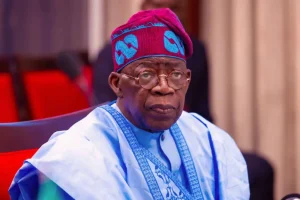
These are encouraging words, but Nigerians have heard encouraging words before. What they now demand is decisive action — a “clear, collective path” as the President himself put it — to create a community-based policing system that reflects the peculiar needs of different regions.
Time to Let Governors Try
Even if Lawal’s two-month timeline sounds unrealistic, there is merit in allowing governors like him to try. At worst, they will prove that the problem requires more than state policing alone; at best, they will deliver faster, more targeted results than Abuja can ever hope to achieve.
FURTHER READING
State police would mean governors could deploy security operatives immediately during attacks, rather than wait for clearance from the capital. It would also allow recruitment of officers familiar with local terrain, culture, and languages, a critical advantage in intelligence gathering and trust-building with communities.
Philip Ibitoye is a Special Correspondent with EKO HOT BLOG. Click here to find daily analysis and critical insight on trending issues in Lagos and other parts of Nigeria.
Click here to watch the video of the week below:
Advertise or Publish a Story on EkoHot Blog:
Kindly contact us at [email protected]. Breaking stories should be sent to the above email and substantiated with pictorial evidence.
Citizen journalists will receive a token as data incentive.
Call or Whatsapp: 0803 561 7233, 0703 414 5611