
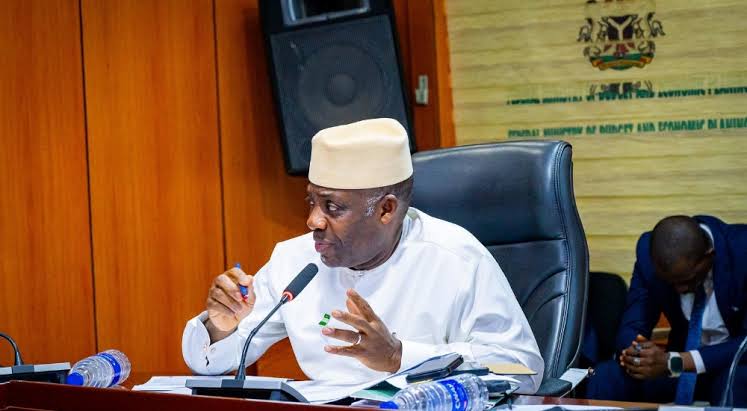
- FG Unveils Curriculum Reforms to Ease Subject Load, Boost Skills
- The new structure takes effect from the 2025/26 academic session
- Dr. Alausa noted that the streamlined curriculum would allow learners to focus on core competencies
The Federal Government has announced a comprehensive overhaul of Nigeria’s education curriculum, a move aimed at easing the burden of excessive subjects on students while strengthening skill acquisition and aligning learning with global standards.
Eko Hot Blog reports that the Minister of Education, Dr. Maruf Tunji Alausa, and Minister of State for Education, Prof. Suwaiba Sa’id Ahmad, disclosed the reforms at a press briefing in Abuja on Tuesday.
EDITOR’S PICK
- Augustine University Holds Thanksgiving, Welcomes New Vice-Chancellor
- Lagos Is a No Man’s Land – Tinubu’s Adviser Daniel Bwala
- Alausa Lauds First Lady’s National Library Donation Initiative on 65th Birthday
Under the new structure, which takes effect from the 2025/26 academic session, the number of subjects across all levels will be significantly reduced. Pupils in Primary 1–3 will now take between 9 and 10 subjects, down from 13–15, while those in Primary 4–6 will take 11–13 instead of 15–17. Junior secondary students will offer 12–14 subjects, a reduction from 15–18, and senior secondary students will focus on just 8–9 subjects, compared to the previous 15–20.
Key highlights of the reforms include the reintroduction of Nigerian History as a compulsory subject from Primary 1 to JSS 3 and the introduction of a new subject, Citizenship and Heritage Studies, at the senior secondary level, combining Civic Education, Social Studies, and Nigerian History.
In a bid to strengthen vocational training, trade subjects for non-technical schools have been streamlined to six practical options: solar installation, fashion design, livestock farming, beauty and cosmetology, computer hardware and GSM repairs, and horticulture.
 Meanwhile, the National Business and Technical Examinations Board (NABTEB) will administer 28 revamped trade subjects for technical colleges.
Dr. Alausa said the reforms followed broad consultations with the Nigerian Educational Research and Development Council (NERDC), WAEC, NECO, NBTE, NABTEB, and other stakeholders.
He noted that the streamlined curriculum would allow learners to focus on core competencies without being weighed down by subject overload.
“This new curriculum gives our children the chance to learn in a more functional and focused way,” Alausa stated. “It also allows teachers to deliver more effectively while ensuring government resources are better directed toward building a skill-driven education system.”
The ministers emphasized that the changes reflect government’s commitment to revitalizing the education sector, improving instruction quality, and preparing Nigerian students for the demands of the global economy.
The Ministry assured parents, teachers, and students that support measures will be put in place to ensure a smooth transition to the new system.
FURTHER READING
- COWLSO Marks 25th Anniversary with Medical Outreach in Epe
- Tinubu Directs Security Agencies to Intensify Operations in Katsina State
Click here to watch video of the week
Advertise or Publish a Story on EkoHot Blog:
Kindly contact us at [email protected]. Breaking stories should be sent to the above email and substantiated with pictorial evidence.
Citizen journalists will receive a token as data incentive.
Call or Whatsapp: 0803 561 7233, 0703 414 5611