
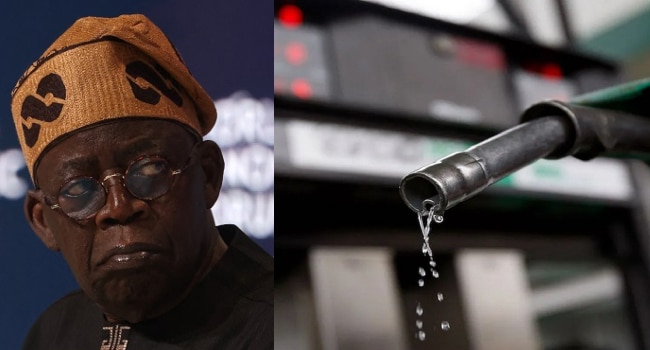
The federal government’s plan to introduce a 5 percent surcharge on refined petroleum products — including petrol and diesel — has been met with swift and loud opposition from industry stakeholders, civil society groups, and political figures.
The Petroleum Products Retail Outlets Owners Association of Nigeria (PETROAN) has warned that the tax could push many of its members out of business, compounding the economic stress on a sector still adjusting to subsidy removal and volatile foreign exchange rates.
EDITOR’S PICKS
Civil society organisations (CSOs) have echoed these concerns, arguing that the surcharge will increase transport costs, food prices, and inflationary pressure on households. The African Democratic Congress (ADC) and Labour Party’s 2023 presidential candidate, Peter Obi, described the plan as worsening the hardship of already overburdened Nigerians.
The latest group to reject the 5% levy on petroleum products was the Trade Union Congress of Nigeria (TUC) which on Sunday described it as “economic wickedness” against already overburdened Nigerians.
With the national pump price of petrol averaging ₦950 per litre — a staggering 382 percent rise from ₦197 per litre when President Bola Tinubu assumed office in May 2023 — critics warn that another levy could be socially and politically explosive.
What the Law Actually Says
The surcharge is not new. It was first introduced under the Federal Road Maintenance Agency (FERMA) Act of 2007 as a funding mechanism for road maintenance but has been inconsistently applied. The 2025 Nigeria Tax Administration Act consolidates this provision with other fiscal measures into a single legal framework to streamline compliance and boost non-oil revenue.
The law states that the surcharge will take effect on January 1, 2026, but its activation is subject to a formal commencement order by the Minister of Finance, which must be published in an official gazette. This distinction is critical — the law creates the legal basis for the charge but does not automatically trigger its enforcement.
Government’s Clarification
Following mounting backlash, Wale Edun, Minister of Finance and Coordinating Minister of the Economy, sought to calm public fears at a press briefing in Abuja on Tuesday.
Edun emphasised that there is no immediate plan to implement the surcharge despite its inclusion in the 2025 Act. “The inclusion of the surcharge in the 2025 Nigeria Tax Administration Act does not mean an automatic introduction of new tax,” he said, stressing that no commencement order has been issued or is being prepared.
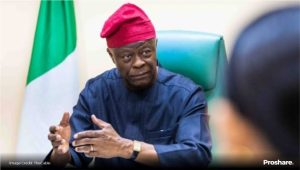
He further explained that implementation would require significant preparation, including institutional realignment, capacity building, and a robust public sensitisation campaign.
The finance minister also said the goal of the tax reforms was not to impose new burdens on Nigerians, but to create a more transparent and effective tax system that curbs leakages, boosts efficiency, and fosters investor confidence.
“This government is fully aware of the economic pressures of the time and will not take decisions that will make things even more burdensome,” Edun stated.
Between Law and Political Reality
This clarification leaves the federal government walking a tightrope: it wants to expand non-oil revenue and demonstrate fiscal discipline to international partners, but it also faces a restive public already reeling from subsidy removal, currency devaluation, and record inflation.
Deferring implementation may buy the government time to prepare politically and administratively, but the January 2026 legal timeline creates pressure. If no commencement order is issued by then, critics could frame it as a policy climb-down, while supporters may see it as a missed revenue opportunity.
The Road Ahead
Whether the surcharge is eventually implemented will depend on several factors, including economic conditions, public engagement, and revenue imperatives. For economic consideration, the implementation will depend on if inflation and pump prices remain high into 2026, introducing a surcharge may be politically unfeasible.
Also, the government has promised sensitisation and education on the tax framework; how well it communicates its benefits could determine public acceptance and whether it goes ahead with implementing the 5% tax on the fuel Nigerians buy. Lastly, Nigeria’s push to boost non-oil revenue amid debt obligations may strengthen the case for implementation despite political risks.
FURTHER READING
For now, Edun’s statement signals that the government is treading carefully. The surcharge remains a legal possibility, but its timing and impact will be shaped by a delicate balancing act between fiscal necessity and public tolerance.
Philip Ibitoye is a Special Correspondent with EKO HOT BLOG. Click here to find daily analysis and critical insight on trending issues in Lagos and other parts of Nigeria.
Click here to watch the video of the week below:
Advertise or Publish a Story on EkoHot Blog:
Kindly contact us at [email protected]. Breaking stories should be sent to the above email and substantiated with pictorial evidence.
Citizen journalists will receive a token as data incentive.
Call or Whatsapp: 0803 561 7233, 0703 414 5611